Supermarket Management Software for Furniture
Discover Supermarket Management Software for furniture showrooms. Manage stock, orders, purchasing and multiple outlets with Sellix.
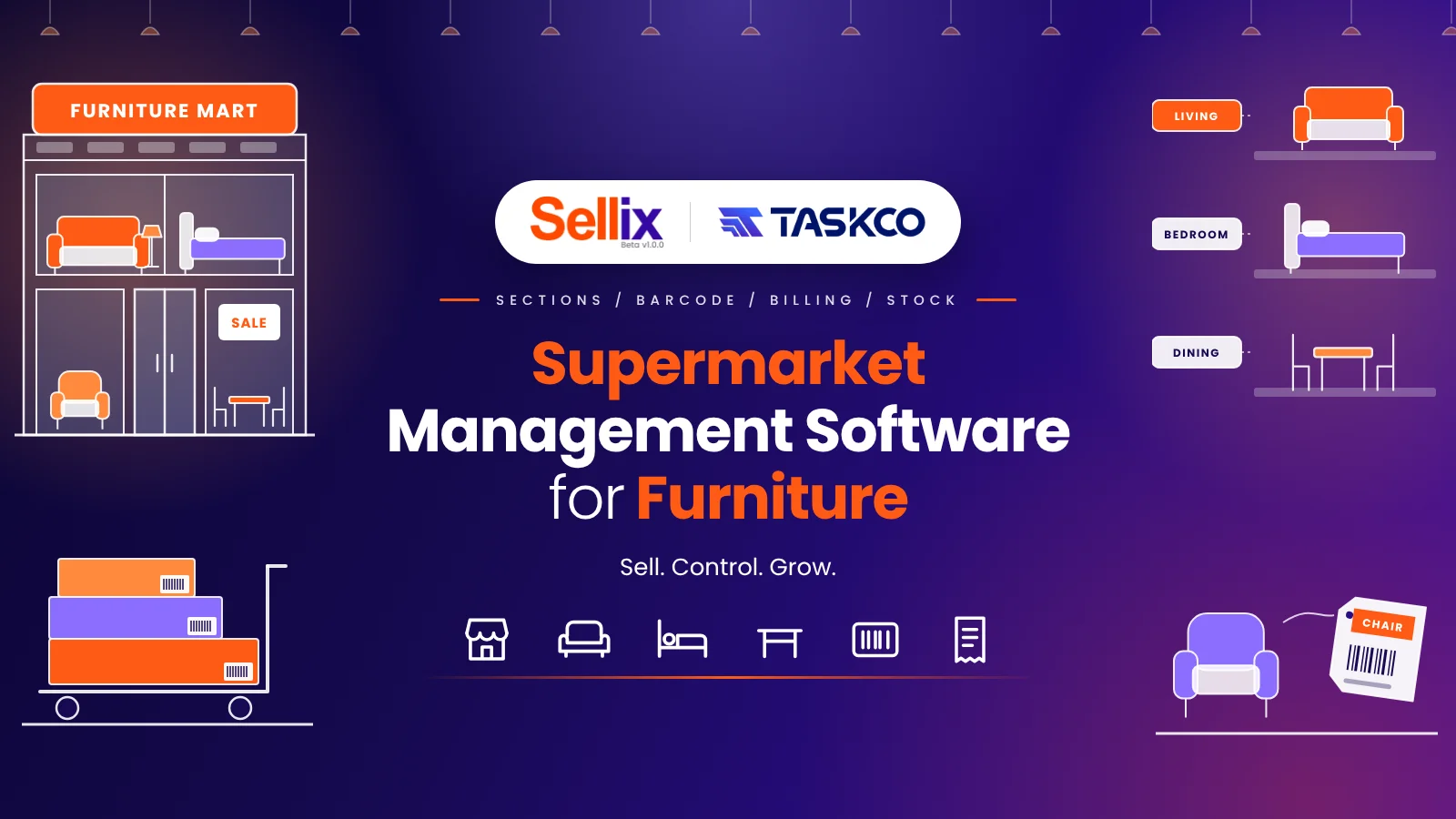
Best Supermarket Management Software for Furniture Showrooms
Managing a furniture showroom involves more than displaying and selling sofas, beds, dining tables and home décor products. Retailers must organize product information, monitor showroom and warehouse stock, manage supplier purchases, process customer orders and track payments. When a furniture business operates multiple locations, maintaining accurate information across every showroom becomes even more challenging.

Choosing the right Supermarket Management Software can help businesses connect important retail operations through one platform. Although this keyword is commonly associated with grocery retail, the underlying requirements of inventory, purchasing, POS billing and multi-outlet control also apply to furniture businesses. For furniture retailers in Bangladesh, Sellix by Taskco Digital offers connected retail management capabilities designed to support showroom operations and business growth.
Why Furniture Showrooms Need Supermarket Management Software
Furniture retail has different operational requirements from many other retail categories. Products are often expensive, occupy significant storage space and may require advance payments or special order arrangements. A showroom may display products while additional inventory is stored in a separate warehouse.

When a business expands to multiple branches, these activities become harder to coordinate.
Without suitable Supermarket Management Software, furniture retailers may face problems such as:
Unclear stock availability: Employees may not know whether a product is available in another showroom or warehouse.
Disconnected inventory records: Separate stock registers can create inconsistencies between recorded and actual quantities.
Unorganized customer orders: Custom orders, advance payments and pending balances can become difficult to monitor.
Purchasing complications: Supplier information and incoming stock may be recorded in different systems.
Limited branch visibility: Owners may struggle to compare sales and inventory performance across showrooms.
Delayed financial reporting: Collecting information from multiple locations can slow down business decisions.
A connected platform can help furniture retailers manage these activities with more consistent records and better operational visibility.
Essential Supermarket Management Software Features for Furniture Showrooms
Furniture businesses should evaluate software based on their showroom, inventory and customer order requirements. Basic billing alone may not provide enough operational support for a growing furniture retailer.

Here are important capabilities to consider when selecting Supermarket Management Software for furniture businesses.
1. Centralized Multi-Outlet Management
A furniture chain needs a common management environment where owners can monitor different showroom locations.
A centralized system should support:
Multiple showroom management.
Branch-wise stock visibility.
Outlet-level employee permissions.
Centralized business monitoring.
Outlet-wise sales information.
Sellix provides multi-outlet management through centralized head office visibility, live stock information by outlet and branch-scoped staff access.
This helps business owners maintain a clearer picture of their operations without relying entirely on separate reports from each showroom.
2. Furniture Inventory Management
Furniture retailers manage products across different categories, including sofas, beds, wardrobes, dining tables, chairs and home décor items. Maintaining organized inventory records is important for understanding product availability and purchasing requirements.
A suitable Supermarket Management Software platform should help retailers:
Maintain organized product records.
Monitor stock quantities.
Track inventory across outlets.
Manage stock movements.
Identify low-stock products.
Review purchasing and receiving information.
Sellix connects inventory with purchasing and sales activities, helping furniture businesses maintain more organized stock records.
However, specialized furniture attributes such as fabric codes, dimensions, finishes and room-planning configurations should be evaluated separately if they are essential to your business.
3. Stock Transfers Between Showrooms and Warehouses
A furniture business may store products in a warehouse while displaying selected items in different showrooms. Sometimes, a product available at one location needs to be moved to another to meet customer demand.
A structured stock transfer process helps businesses record:
Sending and receiving locations.
Products and quantities.
Transfer status.
Inventory movement.
Receiving information.
Sellix supports stock transfers with in-transit tracking. This helps retailers maintain visibility when products move between different locations.
For furniture chains, this capability can support better coordination between showrooms and storage locations.
4. Custom Orders and Advance Payment Management
Furniture customers may request products with specific requirements or place orders that involve advance and partial payments.
For example, a customer may order a furniture set and pay an advance before the remaining amount is collected. The business needs organized transaction records to monitor these payments.
Sellix supports custom orders with advance and partial payments for furniture and home décor businesses.
Its quotation-to-order-to-invoice workflow also helps organize sales documentation.
When evaluating Supermarket Management Software, furniture retailers should confirm whether the available order workflows match their specific customer commitments and payment processes.
5. POS Billing and Payment Management
An organized billing process helps furniture showrooms handle customer transactions more efficiently.

Important POS capabilities include:
Barcode scanning.
Fast checkout.
Invoice and receipt generation.
Split and partial payments.
Returns and refunds.
Cashier shift management.
Sellix provides an offline-first POS with barcode scanning, queued sales, split payments, returns and store credit capabilities.
It also supports recording bKash, Nagad and Rocket transactions with TrxID information on receipts. This helps retailers organize payment records alongside their sales activities.
6. Purchasing and Supplier Management
Furniture retailers depend on suppliers to maintain product availability. Without organized purchasing records, it can become difficult to monitor incoming products, outstanding payments and supplier-related activities.
A suitable Supermarket Management Software solution should support:
Supplier information management.
Purchase records.
RFQs.
Partial receiving.
Supplier ledger.
Accounts payable aging.
Sellix includes purchasing workflows, partial receiving, RFQs, supplier ledgers and payable aging. These capabilities help furniture businesses organize purchasing and supplier information within their wider retail operations.
7. Outlet-Wise Sales and Financial Reporting
Furniture showroom owners need to understand how each location contributes to overall business performance.
A useful reporting system should help management review sales, product profitability and financial information.
Sellix includes real profit intelligence, providing profit per product and per order. Its integrated accounting capabilities also support general ledger, accounts payable and receivable, trial balance and financial statements.
This helps retailers connect daily sales activities with broader financial information.
Benefits of Supermarket Management Software for Furniture Businesses
The right platform can help furniture retailers improve operational visibility and reduce dependence on disconnected records.

Better Control Over Multiple Showrooms
Centralized management helps owners monitor different locations through a common platform. Branch-wise stock visibility and outlet-level access can improve coordination between head office and showroom teams.
Improved Inventory Visibility
Connected inventory records help retailers understand product availability across different locations. This makes it easier to review stock before purchasing or arranging transfers.
More Organized Customer Transactions
Custom orders with advance and partial payments help furniture businesses maintain better payment records for customer purchases.
Easier Stock Movement
In-transit stock tracking helps retailers maintain visibility when products move between showrooms and warehouses.
Better Purchasing Decisions
Supplier ledgers, purchase records and partial receiving help organize purchasing activities. Available AI-assisted forecasting and reorder capabilities can also support stock replenishment planning.
Clearer Business Performance
Product-level and order-level profit information helps owners understand financial performance beyond total sales. Outlet-level business visibility supports more informed management decisions.
How to Choose the Right Supermarket Management Software for Furniture Showrooms
Before selecting a platform, furniture retailers should identify their current operational requirements and future expansion plans.
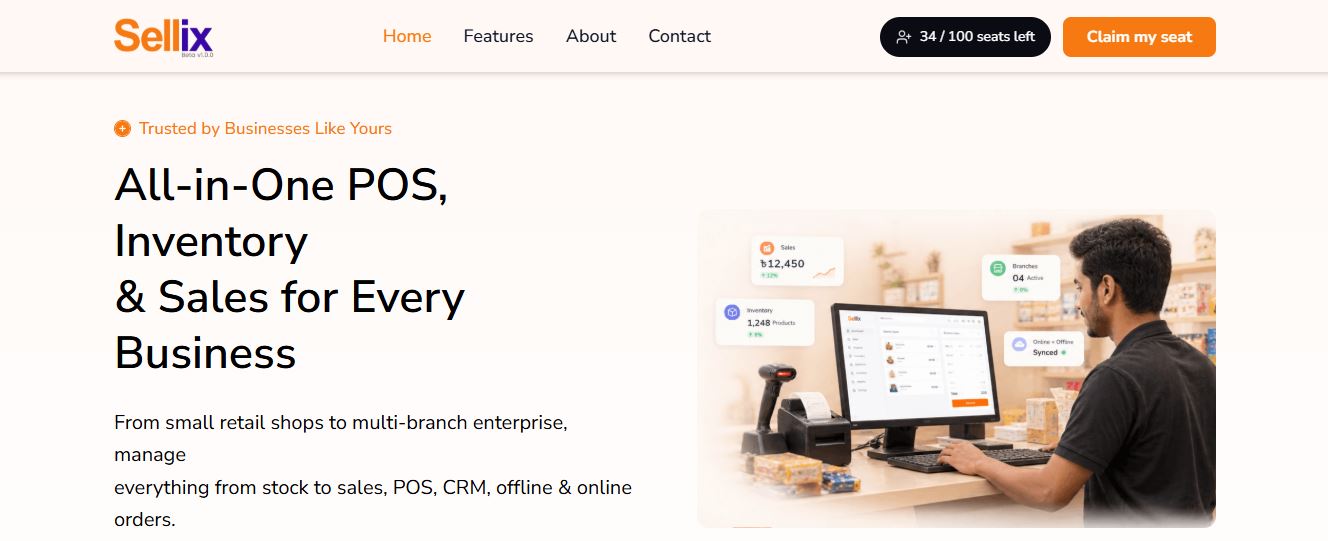
Understand Your Showroom Structure
List your existing showrooms, warehouses and storage locations. Consider whether the software can support centralized monitoring and branch-level inventory visibility.
Evaluate Furniture Order Requirements
Check how the platform handles quotations, customer orders, advance payments and partial payments. If you sell customized furniture, confirm whether the system supports your specific product configuration requirements.
Review Inventory and Transfer Capabilities
Check whether the system provides stock visibility across locations and records products moving between showrooms or warehouses.
Examine POS and Payment Features
Consider barcode billing, receipts, returns, split payments and offline operations. These capabilities can help showroom employees manage daily transactions.
Check Supplier and Accounting Workflows
Review purchasing, supplier records, partial receiving and accounting capabilities. These features help connect procurement with the financial side of the business.
Compare Pricing and Scalability
Consider outlet-based pricing, user limits, setup costs and available features. A platform should support your current business requirements while offering a practical expansion path.
Why Choose Sellix by Taskco Digital as Your Supermarket Management Software?
Sellix by Taskco Digital is an AI-driven retail business operating platform designed for Bangladeshi shops, showrooms and growing retail chains. It connects POS billing, inventory, purchasing, suppliers, accounting, customers and multi-outlet operations in one platform.
For furniture and home décor retailers, several capabilities are particularly relevant.
Centralized Multi-Outlet Management
Sellix supports centralized head office visibility, live stock information by outlet and branch-scoped employee permissions. This helps furniture businesses monitor operations across multiple locations.
Furniture Custom Orders and Payments
Sellix supports custom orders with advance and partial payments. These capabilities can help furniture retailers organize customer transactions and payment records.
Warehouse-to-Showroom Stock Management
Furniture and home décor businesses can use Sellix's warehouse-to-showroom stock workflows to support inventory visibility between storage and showroom operations.
Delivery and Installation Scheduling
Sellix includes delivery and installation scheduling capabilities for furniture and home décor businesses, helping retailers organize these activities alongside customer orders.
Stock Transfers with Tracking
In-transit stock tracking helps retailers maintain visibility when products move between locations.
Purchasing and Accounting
Sellix connects supplier purchasing, partial receiving and accounting capabilities, helping businesses manage procurement and financial information within one platform.
Offline-First POS Billing
The POS can continue handling queued sales during internet disruptions and synchronize them when connectivity returns. This helps reduce dependence on uninterrupted internet access at showroom counters.
Flexible Plans for Growing Furniture Retailers
Sellix offers per-outlet subscription plans and an Enterprise option for larger businesses requiring additional deployment flexibility. Features and limits vary by plan, so discuss your showroom count, user requirements and operational needs with Taskco Digital before selecting a package.
For furniture retailers searching for Supermarket Management Software to connect sales, inventory, purchasing and multiple showrooms, Sellix by Taskco Digital is worth exploring.
Get started with Sellix by Taskco Digital
Website: https://taskco.io/sellix/
Contact: +880 1896-263654