How to Choose the Best Clothing Store Management Software
Learn how to choose clothing store management software for POS, size and colour variants, inventory, purchasing and retail business growth.
How to Choose the Best Clothing Store Management Software
Managing a clothing store involves more than displaying products and processing customer payments. A single clothing design may be available in several sizes and colours, creating multiple stock variations that need to be monitored separately. Add seasonal collections, frequent exchanges, supplier purchases and changing customer preferences, and daily operations become increasingly difficult to manage manually.
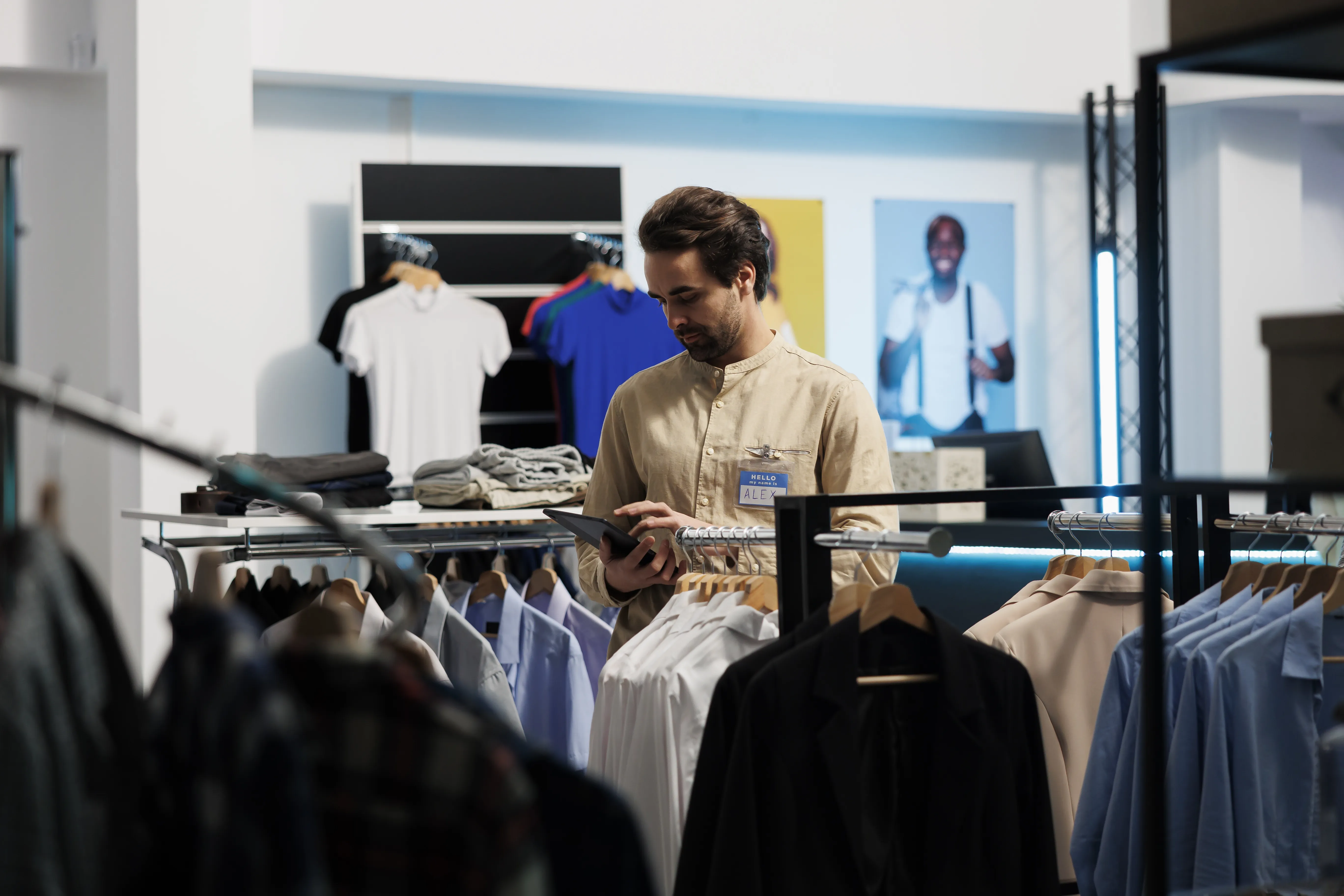
Many clothing retailers still depend on notebooks, spreadsheets or separate billing applications to manage their businesses. These methods may work when a shop has a limited product range, but they can create stock mismatches, inaccurate sales records and difficulties tracking business performance as operations grow.
Clothing store management softwarehelps retailers connect important activities, including POS billing, product management, inventory, purchasing, supplier records and financial reporting.
For Bangladeshi clothing businesses, the right platform should also support local payment workflows, offline billing and relevant VAT and Mushak records.SellixbyTaskco Digitaloffers these connected retail capabilities through one platform, making it a strong option for clothing stores that want to improve operational control and prepare for growth.
Best Clothing Store Management Software:SellixbyTaskco Digital
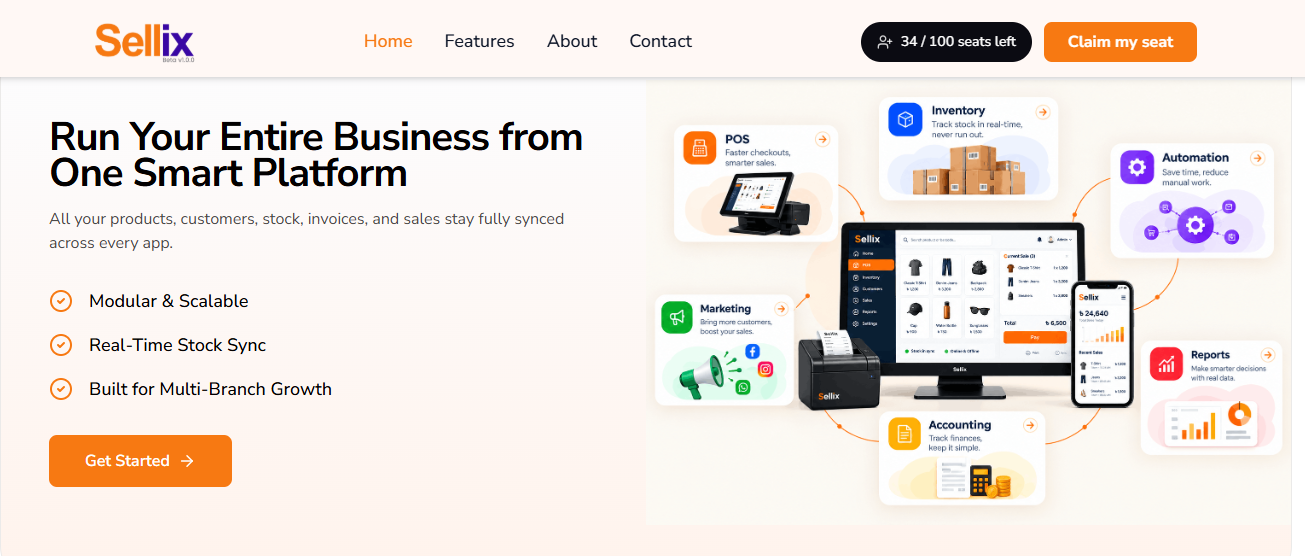
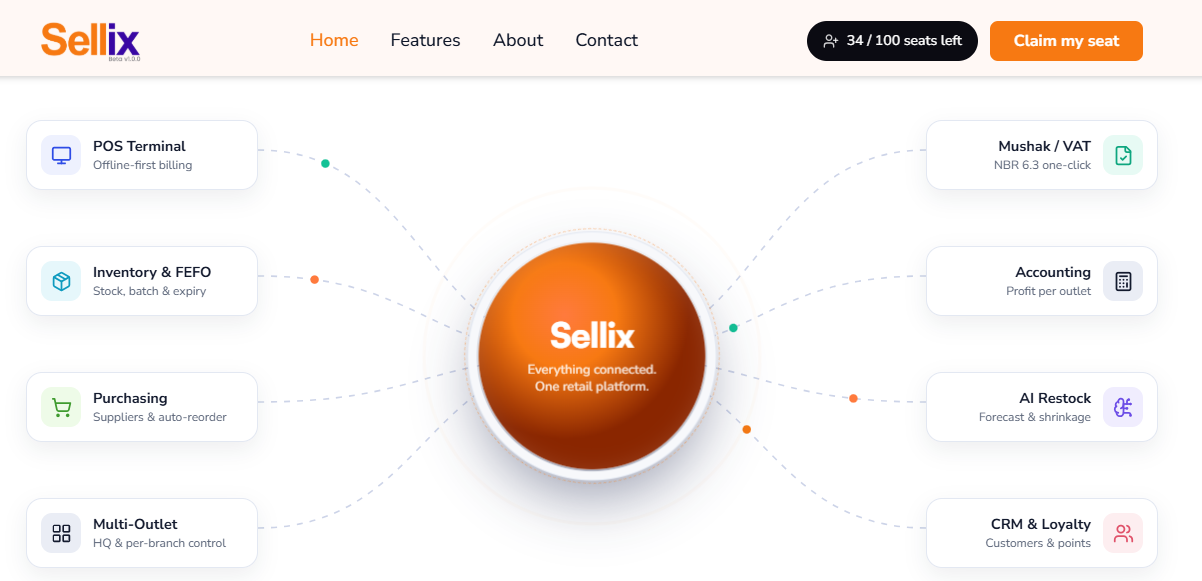
Sellixis an AI-driven retail business operating platform developed byTaskco Digital. It helps clothing stores manage sales, stock, purchasing, suppliers, accounting, employees and business insights through connected modules.
Rather than functioning as a basic billing application, Sellix connects important retail operations so owners can manage their businesses from a single platform.
1. Clothing Store Management Software for POS and Billing
Fast and accurate billing is essential for clothing stores, particularly during weekends, seasonal sales and promotional periods.
Sellix provides an offline-first POS with barcode scanning, parked sales, split payments, returns and store credit. Its till can continue queuing sales during internet interruptions and synchronise transactions when connectivity returns.
Cashiers can record cash, card and supported mobile payment transactions, including bKash, Nagad and Rocket with transaction IDs on receipts.
This helps clothing retailers maintain organised transaction records and reduce dependence on manual billing processes.
2. Product Variants for Clothing Inventory
Clothing products commonly have different sizes and colours. A retailer selling one shirt design in Small, Medium, Large and Extra Large, for example, needs to understand which variations are available rather than relying only on the total quantity of that design.
Sellix supports product size and colour variants. Its inventory capabilities help retailers organise product records and monitor stock as products move through sales and purchasing workflows.
However, clothing retailers should demonstrate their actual product catalogue during onboarding and confirm that their required size-colour matrix, SKU structure and variant-level reporting match the available configuration.
3. Inventory and Purchasing Management
Sellixconnects inventory with purchasing and supplier records. Retailers can manage purchases, partial receiving, supplier ledgers and stock transfers with in-transit tracking.
AI-assisted forecasting and low-stock alerts can also help identify products that may require replenishment. For clothing businesses, this can support better purchasing decisions and help owners avoid relying entirely on guesswork.
4. Employee Control and Sales Monitoring
Clothing stores often depend on several employees to manage sales, customer service and stock. Sellix supports role-based permissions, manager approvals, cashier shift reconciliation and staff scorecards.
These capabilities help owners monitor sensitive activities such as large discounts, refunds, price changes and cash shortages.
5. Accounting and Business Insights
Sellix connects retail operations with accounting capabilities, including general ledger, accounts receivable and payable, trial balance and financial statements. Its real-profit intelligence helps owners review profit at product and order level.
Bangla and English Ask AI, Daily Briefings and operational insights provide additional ways to review business activity.
For clothing retailers looking forclothing store management softwarethat connects billing, inventory and financial visibility, Sellix offers a comprehensive starting point.
Essential Features to Look for in Clothing Store Management Software
Before selecting a platform, identify the features that directly support your clothing store's daily operations. A long feature list does not automatically mean a system is suitable. What matters is whether it can handle your actual products, sales processes and business requirements.

1. Product Size and Colour Variant Management
This is one of the most important requirements for apparel retailers. A clothing store may sell the same design in several sizes and colours, and each variation needs accurate stock information.
Look for software that supports:
Product size and colour variations
Organised product catalogues
Separate identification of sellable variations
Barcode scanning and product search
Product information that staff can access quickly
During a demonstration, select one shirt or dress and check how the system handles all its available variations. Confirm whether the product structure matches your existing catalogue.
2. Inventory Tracking and Stock Visibility
A good inventory system should help owners understand how much stock is available, what has been sold and which products need replenishment.
Important capabilities include:
Current stock records
Low-stock alerts
Purchase and receiving records
Stock adjustment and return workflows
Stock transfers between outlets
Inventory reporting
If you operate multiple showrooms, check whether the system provides outlet-level stock visibility. Sellix supports multi-outlet stock visibility and transfers, helping retailers maintain better control as they expand.
3. POS Billing and Return Management
Clothing customers frequently request exchanges because of size, colour or fitting preferences. Your software should provide a structured process for recording returns and refunds while keeping sales records organised.
Look for barcode scanning, flexible payment recording, receipt generation, parked sales and return management. Ask the provider to demonstrate a complete transaction, including how a return affects the relevant records.
4. Purchase and Supplier Management
Clothing retailers regularly purchase new collections from manufacturers, wholesalers and suppliers. Without organised purchase records, it becomes difficult to review supplier balances and understand purchasing activity.
Useful features include purchase records, partial receiving, supplier ledgers, quotation requests and payable tracking. These functions help connect incoming stock with the wider retail operation.
5. Sales Reports and Profit Tracking
Total sales do not necessarily represent actual profit. Clothing retailers need to understand product costs, sales performance and financial activity to make better purchasing decisions.
Chooseclothing store management softwarethat provides meaningful sales reports, product-level profitability, cash reconciliation and accounting information.
6. Employee Permissions and Manager Approvals
Different employees should have access to different business activities. Cashiers may need billing access, while managers may need purchasing and approval permissions.
Role-based access, manager approvals, shift closing and staff activity monitoring can help create accountability and reduce operational risks.
How to Choose Clothing Store Management Software for Your Business
Once you understand the essential features, evaluate each platform based on your actual requirements rather than relying only on promotional claims.
Step 1: Understand Your Clothing Store Operations
Start by reviewing your current business structure. Identify how many products you manage, how many employees work in your shop, how purchases are recorded and how customers make payments.
Also consider whether you operate a single showroom, a boutique, a warehouse or multiple outlets. Your operational requirements will determine which software capabilities matter most.
Step 2: Check Product Variant Compatibility
Prepare a sample product catalogue containing different sizes and colours. Ask the provider to demonstrate how those products are created, searched, billed and monitored.
Do not assume that every retail system supports every type of clothing matrix. Confirm the exact configuration and reporting capabilities before making a decision.
Step 3: Test Inventory and Billing Workflows
Ask the provider to demonstrate a complete retail transaction:
Add a clothing product with its available variations.
Scan the product during checkout.
Complete a customer transaction.
Review the relevant inventory records.
Process a return or refund.
Check the resulting transaction information.
This practical test helps you understand whether the platform fits your daily workflow.
Step 4: Evaluate Business Reporting
Check whether the system can provide the information you need to manage your shop. Review sales performance, product profitability, stock availability, supplier balances and employee activity.
If you plan to expand, also check whether you can compare business activity across outlets.
Step 5: Consider Local Requirements and Support
For clothing businesses in Bangladesh, evaluate offline billing, local payment recording, relevant VAT and Mushak workflows, data import and staff training.
Ask about onboarding, technical support, hardware compatibility and how your existing product records will be migrated.
Step 6: Compare Pricing and Future Growth
Do not select a platform based only on its lowest subscription fee. Consider setup charges, additional users, storage, integrations, hardware and future outlet requirements.
The rightclothing store management softwareshould fit your present budget while providing a practical path for future expansion.
Benefits of Using Clothing Store Management Software
A connected retail platform can improve several areas of clothing store operations.
Organised product information:Maintain structured product records and supported size and colour variations.
Better stock visibility:Review available stock and identify products that may need replenishment.
Efficient checkout:Use barcode scanning, flexible payments and organised sales records.
Improved purchasing control:Connect purchase activity with supplier information and inventory records.
Better financial understanding:Review sales, costs, accounting information and product-level profitability.
Stronger staff accountability:Apply employee permissions, manager approvals and shift reconciliation.
Support for expansion:Manage additional outlets with connected stock visibility and operational controls.
By bringing these activities together,clothing store management softwarecan reduce the complexity of managing a growing fashion retail business.
How Much Does Clothing Store Management Software Cost?
Pricing depends on the number of outlets, users, available modules, setup requirements and additional services. Some providers charge monthly subscriptions, while others may require implementation fees or separate hardware purchases.
Sellixoffers three published subscription plans:
Start:৳1,490 per outlet per month, with a one-time setup fee of ৳10,000. Designed for small businesses.
Grow:৳2,990 per outlet per month, with a one-time setup fee of ৳22,000. Designed for growing retailers.
Scale:৳4,990 per outlet per month, with a one-time setup fee of ৳35,000. Designed for multi-outlet businesses.
Enterprise:Custom pricing for larger organisations requiring options such as private cloud, on-premise deployment or a one-time licence.
Prices exclude VAT, and features vary by plan. Sellix also provides a 14-day free trial according to its product profile. Confirm the latest pricing, available features and setup requirements before subscribing.
When comparingclothing store management software, calculate the total cost rather than focusing only on the monthly subscription.
Why ChooseSellixbyTaskco Digitalfor Clothing Stores?
Sellixis designed for retailers who need more than basic billing and stock records. Its connected platform brings important retail activities together while supporting the operational requirements of different retail sectors, including fashion and clothing.
Here are some reasons clothing retailers should consider Sellix:
Retail-focused product management:Supports size and colour variants for clothing products.
Connected POS and inventory:Links sales activity with retail inventory workflows.
Purchasing and supplier records:Helps organise purchases, partial receiving and supplier balances.
Operational control:Provides manager approvals, employee permissions and staff scorecards.
Business intelligence:Offers product-level profit insights, AI-assisted forecasting and Daily Briefings.
Multi-outlet management:Supports outlet-level stock visibility, transfers and centralised operational control.
For a clothing retailer planning to move beyond separate billing tools and spreadsheets, Sellix provides a connected foundation to manage daily operations and support business growth.
Get started withSellixbyTaskco Digital
Website:https://taskco.io/sellix/
Contact: +880 1896-263654