Best Store Management Software for Furniture Brands
Discover the best store management software for furniture brands to manage sales, inventory, custom orders, payments, and multiple outlets.
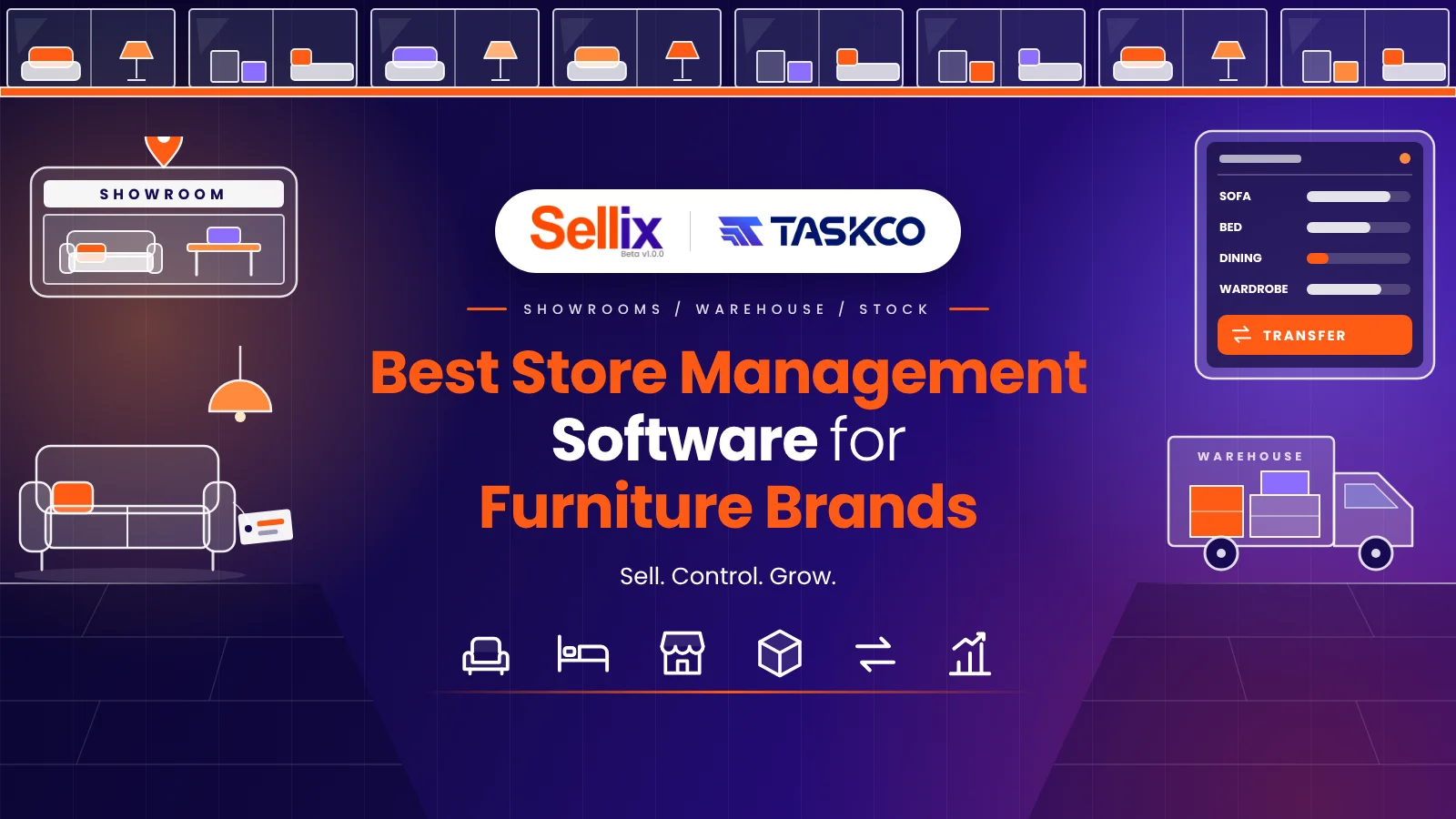
Best Store Management Software for Furniture Brands
Running a furniture business involves much more than displaying products and completing sales. Furniture brands manage large product catalogues, showroom displays, warehouse stock, supplier purchases, customer orders, advance payments, and delivery arrangements. As a business expands, managing these activities through notebooks, spreadsheets, and disconnected applications becomes increasingly difficult.

This is where store management software for furniture brands becomes important. A connected platform helps businesses organise daily operations, monitor inventory, manage customer transactions, and understand sales performance from one place.
For furniture retailers in Bangladesh, Sellix by Taskco Digital is a strong option to consider. It brings POS billing, inventory, purchasing, supplier management, accounting, VAT-related records, customer management, and multi-outlet operations together. Its furniture-focused capabilities also support custom orders, advance and partial payments, warehouse-to-showroom stock management, and delivery and installation scheduling.
Let's explore what furniture businesses should look for and how to choose the right solution.
Why Do Furniture Brands Need Store Management Software?
Furniture retail has operational requirements that are different from many other retail businesses. A showroom may display dozens of sofas, beds, dining tables, wardrobes, and home décor products, while additional stock remains in a separate warehouse.

Without connected records, employees may struggle to confirm product availability, track customer payments, or coordinate orders with the warehouse. The right store management software for furniture brands helps bring these activities into a more organised workflow.
Some common challenges include:
Inventory confusion: Staff may not know whether a product is available in the showroom, warehouse, or another outlet.
Custom order management: Special customer requirements and order details can become difficult to track manually.
Payment tracking: Advance payments, partial payments, and remaining balances need accurate records.
Supplier coordination: Purchase orders, received products, and outstanding supplier payments require regular monitoring.
Delivery coordination: Delivery and installation arrangements need to stay connected with customer orders.
Profit visibility: Sales figures alone do not always show the actual profitability of products or outlets.
A suitable platform helps furniture businesses reduce manual work and maintain more consistent operational records.
Best Store Management Software for Furniture Brands: Sellix by Taskco Digital
Sellix by Taskco Digital is an AI-driven retail business operating platform designed for shops, showrooms, and growing retail chains in Bangladesh. Rather than working as a standalone billing tool, Sellix connects important retail activities through one platform.
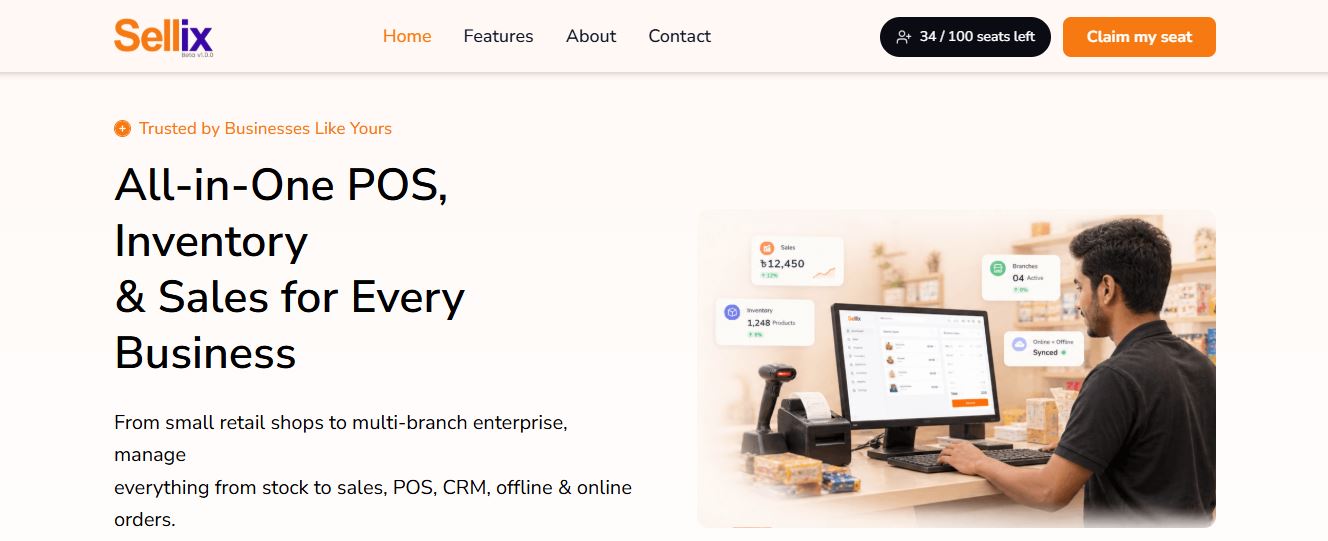
For furniture retailers, store management software for furniture brands should support the complete journey from showroom sales to stock control and customer payments. Sellix offers several relevant capabilities to help manage that workflow.
1. Custom Furniture Orders and Payment Management
Furniture customers often request products with specific requirements or place orders that need to be fulfilled later. Managing these transactions in a notebook can make it difficult to track payment history and outstanding balances.
Sellix supports custom orders with advance and partial payments. Its quotation-to-order-to-invoice workflow also helps organise the sales process from an initial quotation to a completed invoice.
With this approach, furniture businesses can maintain clearer transaction records and follow up on remaining payments. This makes store management software for furniture brands especially useful for businesses that regularly handle high-value customer orders.
2. Warehouse and Showroom Inventory Management
A furniture business may keep display products in its showroom and additional stock in a warehouse. If these records are disconnected, employees may provide customers with incorrect availability information.
Sellix supports warehouse-to-showroom stock management and stock transfers with in-transit tracking. Businesses can organise stock movement and maintain visibility across their retail operations.
The platform also supports purchasing, partial receiving, supplier ledgers, and accounts payable ageing. These capabilities help furniture retailers coordinate purchases and monitor supplier-related transactions.
A reliable store management software for furniture brands should make it easier to understand what stock is available and where it is located.
3. POS Billing and Sales Management
A showroom needs a convenient way to process customer purchases and maintain accurate sales records. Slow billing or disconnected transaction records can affect the customer experience.
Sellix includes an offline-first POS system with barcode scanning, fast billing, split payments, returns, and store credit. If the internet connection becomes unavailable, the till can queue sales and synchronise them after connectivity returns.
Manager approvals can also be configured for sensitive activities such as large discounts, price changes, refunds, and credit-limit exceptions.
These features help furniture businesses maintain more organised counter operations while improving staff accountability.
4. Delivery and Installation Scheduling
Furniture purchases frequently involve delivery arrangements, and some products require installation after reaching the customer's location. Missing or scattered delivery information can create confusion between showroom staff and operational teams.
Sellix's furniture-focused capabilities include delivery and installation scheduling. This helps businesses organise these activities as part of their retail workflow.
When evaluating store management software for furniture brands, businesses should check whether delivery coordination is included, how scheduling works, and whether the workflow matches their actual fulfilment requirements.
Note that route optimisation, driver tracking, vehicle capacity planning, and automated customer delivery notifications should be verified separately if these are essential to your operations.
5. Accounting, VAT, and Profit Reports
Understanding business performance requires more than checking daily sales. Furniture retailers need to monitor purchases, expenses, supplier payments, customer dues, and product costs.
Sellix connects retail transactions with integrated accounting capabilities, including general ledger, accounts receivable, accounts payable, trial balance, and financial statements.
Its VAT-related features include Mushak 6.3 invoices and relevant registers and returns generated from connected sales and purchase records. Available features depend on the selected plan.
Sellix also provides profit insights at product and order level. This helps business owners understand performance beyond total revenue.
For growing furniture brands, store management software for furniture brands should make financial information easier to review and use for business decisions.
Essential Features to Look for in Store Management Software for Furniture Brands
Not every retail platform is designed to support the operational needs of furniture businesses. Before selecting a solution, evaluate the following capabilities.

Inventory and Stock Visibility
Choose store management software for furniture brands that helps you monitor products across showrooms and warehouses. Stock transfers, purchase records, low-stock alerts, and accurate inventory updates can reduce confusion and improve purchasing decisions.
Custom Orders and Payment Tracking
Check whether the platform can organise quotations, customer orders, advance payments, partial payments, invoices, and outstanding balances. These workflows are particularly important when customers order furniture that is not immediately available.
Supplier and Purchase Management
A furniture business depends on reliable suppliers. Look for purchase records, partial receiving, supplier ledgers, and payable tracking to maintain better control over procurement.
Multi-Outlet Management
If your brand operates multiple showrooms, store management software for furniture brands should provide outlet-level visibility. Check whether you can monitor stock, sales, staff activity, and transfers across branches.
Reporting and Business Insights
Sales, stock, purchasing, and financial reports help owners identify business trends. Consider platforms that provide product-level profitability, stock forecasts, and consolidated business reporting.
Security and Staff Accountability
Role-based permissions, manager approvals, cashier records, and transaction monitoring help protect business operations. These controls become more important as the number of employees and outlets increases.
How to Choose the Right Store Management Software for Furniture Brands
Selecting software should be based on your actual business workflow, not simply the number of features advertised. Consider these steps before making a decision.
1. Identify your operational challenges
List the areas where your business loses time or faces errors. These may include stock mismatch, delayed billing, untracked customer payments, supplier coordination, or limited outlet visibility.
2. Map your furniture sales process
Understand how your team handles showroom enquiries, quotations, custom orders, advance payments, stock allocation, delivery, and final invoicing. Make sure the software supports the workflows you actually use.
3. Check inventory management capabilities
Ask whether the platform can distinguish showroom and warehouse stock, record stock transfers, manage purchasing, and provide useful stock reports.
4. Review accounting and reporting
Check how the software records sales, purchases, supplier payments, customer dues, and business expenses. Ask for a demonstration of the reports you need.
5. Evaluate scalability and support
Your business may expand to additional showrooms or outlets. Choose store management software for furniture brands that can support business growth without forcing you to maintain separate records for every location.
6. Request a live demonstration
A product demonstration is one of the best ways to understand whether a platform fits your business. Test real examples, such as processing a sale, recording an advance payment, transferring stock, and reviewing outlet performance.
Other Furniture Store Software Options to Evaluate
Different furniture businesses have different requirements. Some may need a broad retail operating platform, while others may require specialised furniture-industry workflows.
Alongside Sellix, furniture brands can research these established options:
Odoo: A configurable business management platform that combines sales, inventory, purchasing, accounting, and other business applications. It may suit businesses prepared to configure the system for their workflows.
STORIS: A furniture-industry-focused platform offering retail, inventory, merchandising, warehouse, and delivery-related capabilities. It is worth evaluating for established furniture retailers seeking specialised workflows.
Lightspeed Retail: A retail POS platform that can support showroom sales, product management, and multi-location retail operations.
Shopify POS: An option for furniture brands that operate an online Shopify store alongside physical retail locations and want connected commerce operations.
Furniture Wizard: A furniture-focused solution with inventory and delivery-related tools for independent furniture retailers.
These platforms differ in pricing, implementation, integrations, and furniture-specific functionality. Compare their current offerings directly with your business requirements before choosing one.
For Bangladesh-based retailers, local payment practices, VAT requirements, implementation support, and overall affordability should also influence the decision. This is where evaluating store management software for furniture brands in the context of your local operations becomes important.
Why Choose Sellix by Taskco Digital for Furniture Brands?
Sellix brings several important retail operations together in one platform. Its furniture-focused capabilities make it relevant for businesses that manage showrooms, warehouses, custom orders, and customer payments.
Here are some reasons to consider Sellix:
Connected Retail Operations: Manage POS, inventory, purchasing, suppliers, accounting, and customers through one platform.
Custom Order Support: Organise custom orders with advance and partial payments.
Warehouse-to-Showroom Stock: Manage stock movement between warehouse and showroom locations.
Delivery and Installation Scheduling: Organise delivery and installation activities as part of furniture retail operations.
Business Intelligence: Review product and order profitability, AI-powered stock forecasts, and business reports.
Scalable Management: Expand from a single shop to multiple outlets with connected operational records.
For furniture businesses looking for store management software for furniture brands, Sellix offers a practical starting point for bringing everyday retail operations under better control.
Final Thoughts
Managing a furniture business requires coordination between showroom sales, inventory, suppliers, customer payments, and product delivery. When these activities are handled through disconnected tools, small operational mistakes can become costly as the business grows.
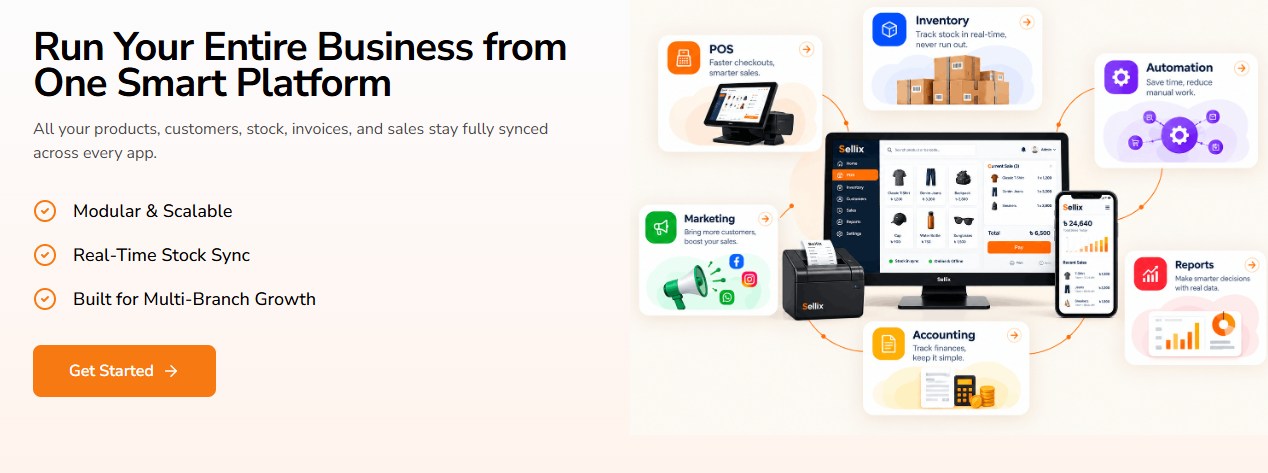
The right store management software for furniture brands helps create a more organised business by connecting sales, stock, purchasing, payments, and reporting.
For furniture retailers in Bangladesh, Sellix by Taskco Digital is a strong platform to explore. Its custom order support, advance and partial payment handling, warehouse-to-showroom stock management, delivery and installation scheduling, and connected retail capabilities make it relevant to furniture retail operations.
Before choosing any platform, request a live demo and check how its workflows match your business. The best solution is the one that helps your team work efficiently today while supporting your future growth.
Get started with Sellix by Taskco Digital
Website: https://taskco.io/sellix/
Contact: +880 1896-263654